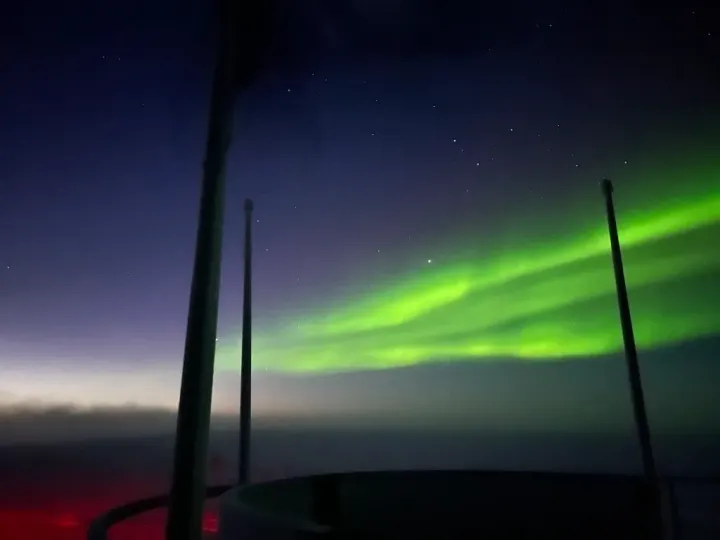
Stages of Twilight at the South Pole
A look at the stages of twilight—astronomical, nautical, civil, and sunrise—marking the Sun’s slow return to the horizon. Outside: -66°F, 23-knot winds at 10,718 feet.
Originally published on 2 August 2023 from the South Pole.
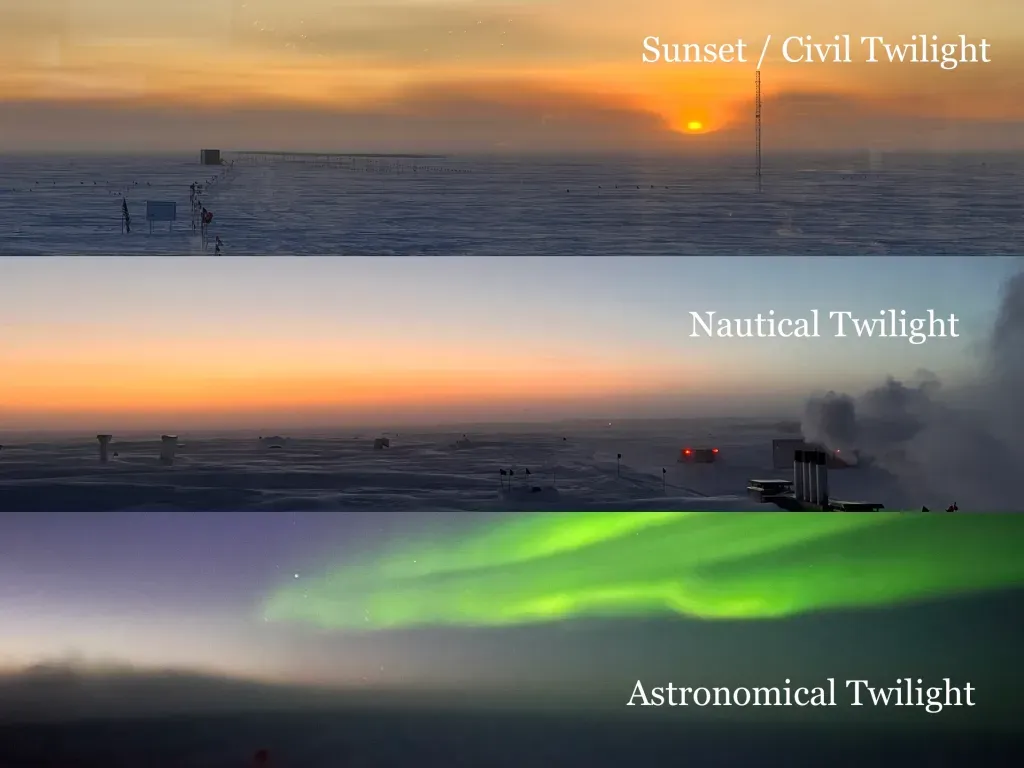
Day 260 at the South Pole Station! I’ll describe the phases of sunrise and twilight as the sun begins to rise here at the South Pole.
Phases of Twilight During Sunrise
Astronomical –> Nautical –> Civil –> Sunrise
Astronomical Twilight – 2 August (Today – Still very dark outside, hard to see without a headlamp)
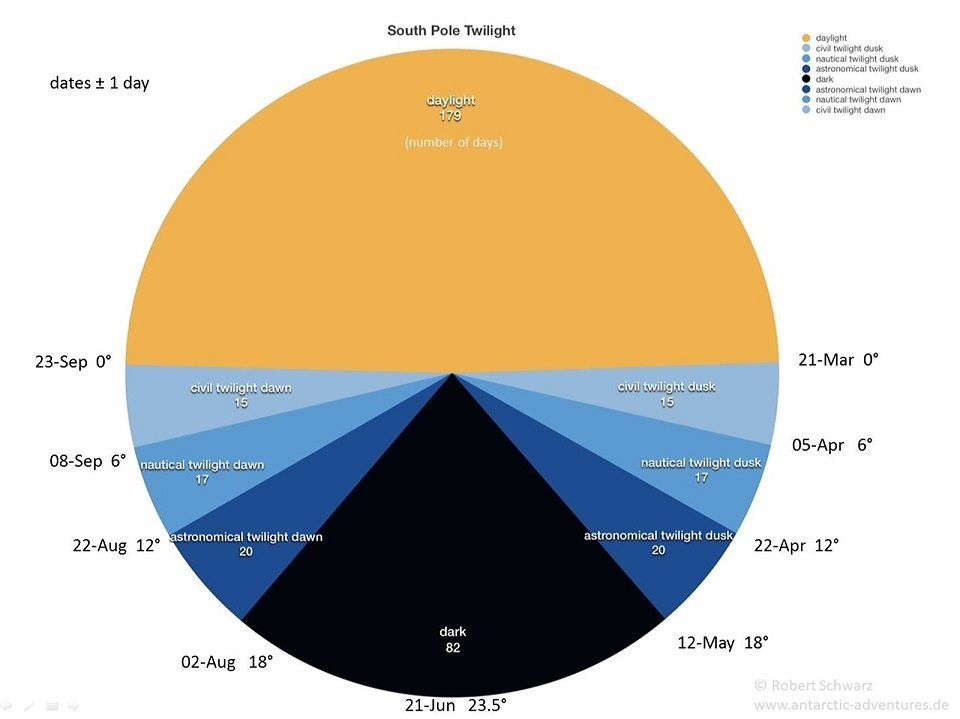
Sun is 18 to 12.1 degrees below the horizon
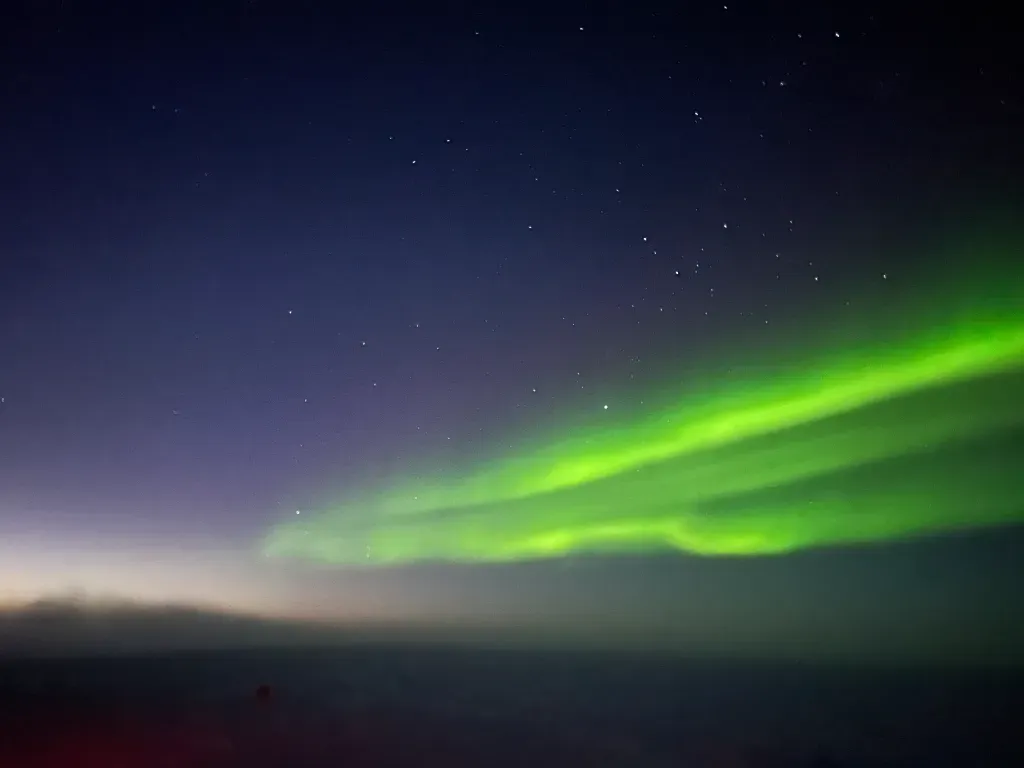
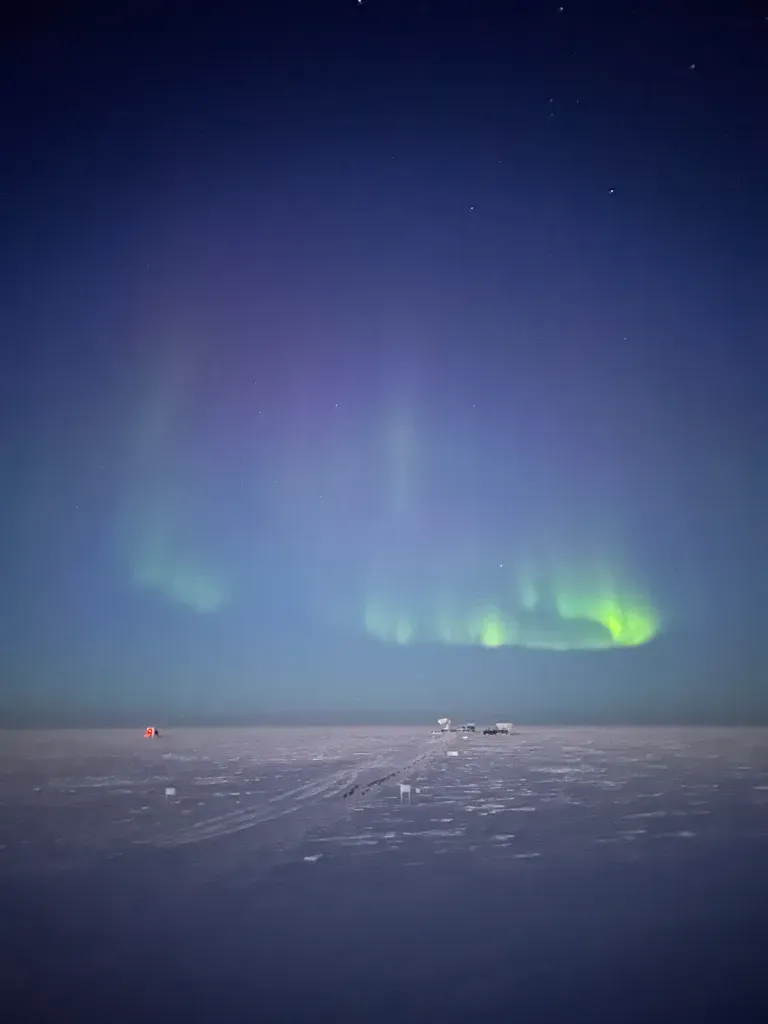
We’ve officially entered astronomical twilight here at the South Pole. Astronomical twilight started today, 2 August 2023. While most think of twilight with some amount of light, there is pretty much no visible light yet. We may get lucky with clear weather and see a faint, faint coloring on the horizon. We will still see our beautiful auroras during this time, however, true color won’t be seen until a week or ten days from now as the Sun, in its steady climb toward the horizon, gets closer to returning.
Nautical Twilight – 22 August (Gradually becoming lighter outside, objects become visible again)
Sun is 12 to 6 degrees below the horizon
On 22 August we enter the second stage of the Sun’s return, nautical twilight. At this point in time we will begin to have real color on the horizon; deep oranges, purples, and blues. It will still be dark outside, but we will begin to be able to make out the outlines of buildings and other structures after our eyes adjust to the darkness. Nautical twilight is only twenty days away from us and the contrast between the unearthly darkness and the return of light to this part of the world will be unique. The stars overhead will still be visible to us, but the auroras, in all of their beautiful green and wavy glory, will have begun to fade and die out. It’s in this period of twilight that we should say our goodbyes to our galactic friend in the sky.
Civil Twilight – 8 September (Good visibility, no longer feels dark outside)
Sun is 6 to 0 degrees below the horizon
Civil twilight is the last of the three phases of twilight during sunrise at the South Pole. After more than a month of a gradually more visible environment due to the Sun’s slow climb back to and above the horizon, civil twilight will be the period of sunrise where we will witness the most beautiful and vibrant skies. The Sun will inch closer and closer back to us and paint our cold South Pole sky with vivid hues of orange, pink, red, and yellow. It will be a magical time where we rejoice that the darkest months of winter are behind, yet we will say good bye to the stars and the auroras. The light from the yet-to-breach-the-horizon-sun will wash out the stars and the auroras will no longer be visible. We will also welcome in the coldest period of our winter where temperatures can regularly drop to -100°F, without windchill.

21 September – Sunrise
The sun is expected to rise at the South Pole on 21 September. After about two weeks of civil twilight, the sun will rise on 21 September and we will see our powerful glowing, life giving orb breach the horizon. On 22 September the sun will likely be fully above the horizon and twilight at this point will officially be over.
We last saw the sun on 23 March. The sun started its dip below the horizon on 22 March 2023, but it did not fully sink below the horizon until 23 March. At that point we entered civil twilight. Sunset twilight at the South Pole is the reverse of sunrise twilight, where we see the three phases of twilight at the South Pole in opposite order. After civil, nautical, and then astronomical twilight earlier this year during sunset, complete and total darkness befell South Pole on 12 May. We spent 12 May to 1 August in absolute, total darkness. The long night as I like to call it, is officially over.
2 August Weather Conditions at the South Pole Station, Antarctica
Temperature: -54.8°C/-66.6°F
Wind Chill: -81.6°C/-114.8°F
Wind Speed: 23.9 KNOTS, 27.5 MPH
Wind Direction: GRID: 15.3 / CARDINAL: NNE
Air Pressure: ALTITUDE (FEET): 10,718 / ALTITUDE (METERS): 3,266 / INCHES HG: 20.0 / MILLIBARS: 677.5
More to come soon from the South Pole!